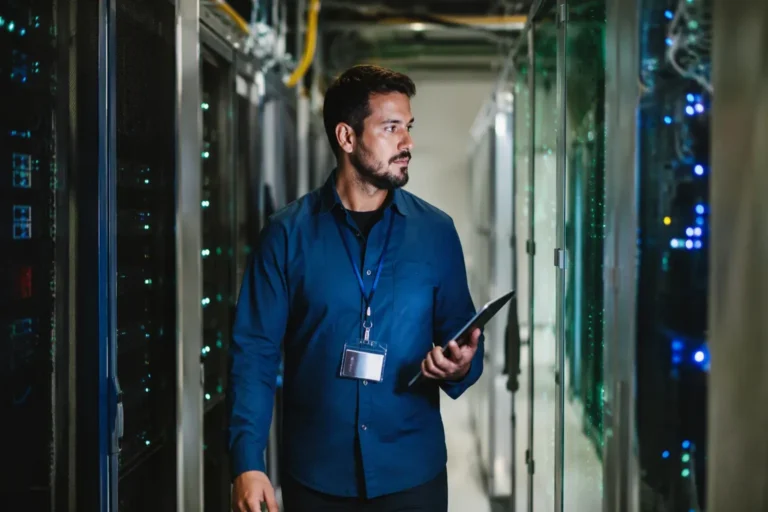
Let me say some numbers out loud. Hundreds of billions of dollars in annual capital expenditure. Data centers consuming gigawatts. Chip orders stretching years into the future. Compensation packages for AI researchers that resemble sports contracts. At some point, the numbers stopped making ordinary sense. So which is it: the foundation of the next economic era, or the inflation of history’s largest bubble? Here’s my honest answer after following the money: possibly both at once. Either way, it’s the business story of the decade, and its outcome will determine what AI costs and does for everyone else. Including you.
Key takeaways
- AI infrastructure spending is the largest capital deployment in tech history, led by the hyperscalers.
- The bull case rests on scaling evidence and winner-take-most platform economics.
- The bubble case rests on the revenue-to-capex gap and circular deal structures; both cases can be partly true.
- Energy and grid capacity now constrain AI growth as much as chips do.
- Enjoy subsidized consumer AI pricing, but build nothing that depends on it lasting.
The scale, stated plainly
The major hyperscalers (Microsoft, Google, Amazon and Meta) have guided combined annual capital expenditure well past three hundred billion dollars, the majority directed at AI infrastructure. Individual data center projects now carry price tags that once bought aircraft carriers. OpenAI and its partners have announced infrastructure ambitions measured in the hundreds of billions over coming years. And venture capital has concentrated to a historic degree: AI companies have drawn roughly half of global venture funding, with foundation model labs raising rounds measured in tens of billions at valuations that assume the future arrives on schedule. Let that sink in: one sector, half the world’s venture money. Concentration like that has no precedent in modern investing.
Why they’re spending: the logic from inside
The bull case, as its proponents frame it, runs on scaling evidence and platform economics. Capability has kept improving with compute, so compute converts into product leadership. The platform winner captures economics resembling search or mobile: winner-take-most markets that justify almost any entry price. And the cost of falling behind is existential for companies whose core products (search, social, cloud) sit directly in AI’s path. From inside a boardroom where these assumptions hold, underinvesting is the risky option. You’d probably sign the check too.
The bubble case, taken seriously
Now steelman the skeptics. Revenue, while growing fast, trails the capital deployed by an order of magnitude. Depreciation on this hardware hits income statements for years. The circular deals (vendors investing in customers who buy their chips and cloud) echo past manias. And every previous infrastructure overbuild, railroads, fiber, looked rational from inside too. The honest synthesis: the technology is real and transformative, AND transformative technologies have produced bubbles before, precisely because the transformation was real. Both things can be true. Probably are. The honest observer holds both possibilities and watches the scoreboard rather than picking a team.
The circular deals, explained without the jargon
That circularity deserves a plain explanation, since much of the bubble debate centers on it. The pattern: a chip maker or cloud provider invests billions in an AI lab; the lab commits to spending comparable billions on that investor’s chips or cloud capacity. On paper, both report growth: the investor books revenue, the lab books funding. Critics call it circular. Defenders counter that it’s ordinary vendor financing scaled up, and the underlying demand (measured in actual usage growth) is real regardless of how capacity is financed.
What should YOU take from the debate? Something simpler than a verdict: watch whether the labs’ revenue from end customers, subscriptions, API usage, enterprise contracts, grows into the infrastructure commitments. That ratio, real demand against financed capacity, is the honest scoreboard, and it’s visible in quarterly filings long before any crash or vindication makes it obvious.
The energy dimension nobody can ignore
Data center demand is reshaping energy markets: nuclear restarts, gas plant revivals, renewable buildouts and grid interconnection queues measured in years. Tech companies have become among the largest energy buyers on earth, and communities hosting data centers are negotiating (or fighting) over water, electricity prices and tax deals. This physical layer now constrains AI expansion as much as chips do, a theme our environmental footprint analysis explores in depth.
What it means for the rest of us
Three concrete consequences matter beyond Wall Street. First, subsidized capability: the giants’ spending keeps consumer AI cheap or free, a subsidy worth enjoying while it lasts. Second, concentration risk: infrastructure costs favor giants and their anointed labs, squeezing independent competition, with open-source models as the main counterweight. Third, cycle exposure: if spending retrenches, effects ripple through cloud pricing, startup funding and the hundreds of local economies now building data centers. The posture for businesses: enjoy the subsidy era while building nothing that depends on prices staying this low.
One underreported angle worth watching: the second-order beneficiaries. The buildout enriches the unglamorous layers, networking equipment, power management, cooling, construction, grid software, and those adjacent indicators (transformer lead times, utility interconnection queues) reveal committed demand months before it appears in AI revenue lines. Watch what the builders are ordering, and you’ll know what the believers actually expect, whatever the keynote rhetoric says.
How we cover AI business news. Figures come from company filings, earnings calls and primary reporting, with estimates labeled as such. We analyze implications for technology users, not investment advice. Standards on our methodology page.
The bottom line
Bull or bubble? Watch the indicators that will resolve it: enterprise AI revenue growing into the capital deployed, inference cost curves continuing their decline, and the first stress test revealing whose economics were structural and whose were circular. For practitioners, the posture is simple: build skills and workflows on the capability as it exists TODAY, negotiate contracts that tolerate repricing, and check that demand-versus-capacity ratio each quarter. The race’s outcome is uncertain; the usefulness of what it has already financed is not. We track the developments that matter in our news section, decoded for practitioners rather than traders.